There is a moment late in Minding the Gap (Bing Liu, 2018) when Liu sits down with his mother and asks her about the man who abused them both.
By this point, Liu has spent years asking other people difficult questions. He has asked his childhood friends about their fathers, relationships, race, drinking and violence. He has watched Zach become a father himself and confronted him about his abuse of Nina. He has listened as Keire tries to reconcile his love for his late father with the pain he caused him.
But sitting across from his mother feels different. Liu's voice is still quiet, his questions still careful, but suddenly there is nowhere left for the filmmaker to hide. The camera that has allowed him to investigate everyone else's life has finally turned back on his own.
It is the culmination of what makes Minding the Gap such an extraordinary documentary. Liu starts filming because he likes skateboarding. He keeps filming because the camera gives him a way to understand his friends. Eventually, he realizes he has been trying to understand himself.
The obvious comparison is Hoop Dreams (Steve James, 1994). Both films find enormous meaning in years of footage of young people pursuing something they love. There is a similar patience to the filmmaking, a willingness to let adolescence quietly become adulthood while the camera keeps rolling. The connection is more than spiritual: James became an early supporter of Liu, who later worked on James's America to Me (2018).
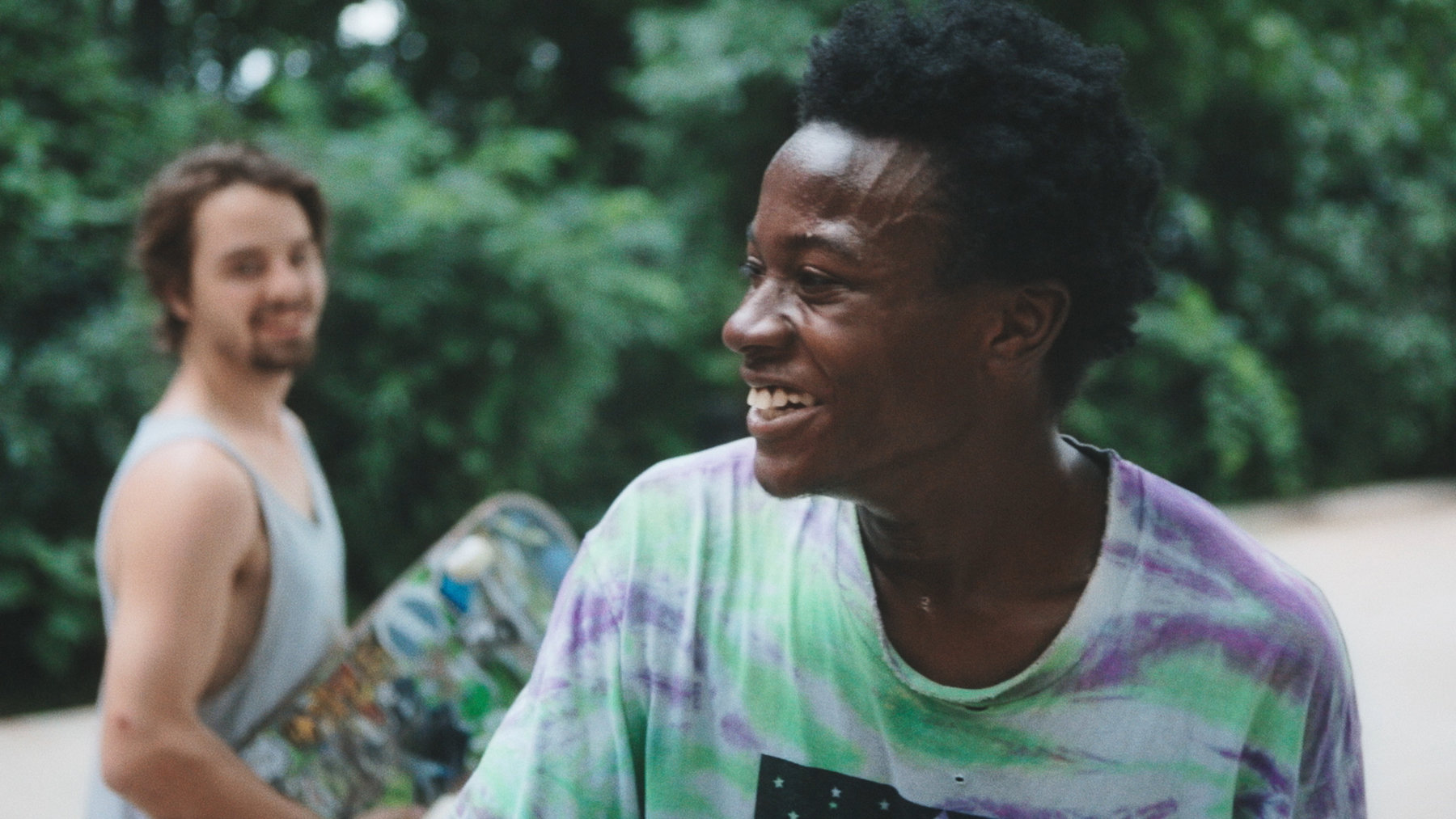
But there is an important difference. James enters the lives of William Gates and Arthur Agee as a documentarian. Liu is already inside his story. Before Minding the Gap was a documentary, there were simply years of footage of teenagers skating around Rockford, Illinois. They launch themselves down staircases, grind rails, fall onto concrete and get back up. Keire smiles constantly. Zach shows up carrying a 30-pack of PBR. The camera hangs around bedrooms, skate shops and parking lots. Much of the early footage has the loose quality of something never intended to explain very much at all.
Liu was a quiet kid growing up in an abusive home. Skateboarding offered an escape, but so did filming it. In one of the film's most revealing conversations, the owner of the skate shop remembers the young Bing: "It felt like you were carrying such weight." The film that follows is partly about discovering what that weight consisted of.
You can see the release in the way Liu films skating. His camera moves with his friends, often at their level, gliding alongside them as Rockford rushes past. Bodies that seem constrained elsewhere in the film suddenly have somewhere to go. The movement is fluid and communal: one skater follows another, the camera following both. During the interviews, that movement largely disappears. Faces fill the frame, rooms seem smaller, and the same camera that once followed these boys through the streets now asks them to sit still and account for themselves.
For Liu, the camera also provides some protection. I recognized a small part of this from making movies when I was younger: there is a strange comfort in being behind a camera, present in a room but also slightly outside it. In Minding the Gap, that position becomes a way into conversations Liu might otherwise never have. The camera gives him a role within the group and perhaps permission to ask questions that would feel impossible without it.
As his old skate footage becomes a documentary, those questions grow more serious. Keire talks about growing up Black in Rockford and his complicated relationship with his father. Zach talks about his childhood and, increasingly uncomfortably, about his relationship with Nina. The boys who once communicated by skating together are suddenly being asked to explain themselves.
Liu has something an outside filmmaker could never manufacture: years of accumulated trust. But that intimacy also creates the film's most difficult problem. When Nina describes Zach's physical abuse, Liu can no longer comfortably remain an observer. Eventually he confronts Zach about it, and the exchange is uncomfortable precisely because their friendship remains visible underneath it. Liu is filmmaker, friend and witness at once, and the film never pretends those roles can be neatly separated.
It also changes the way we understand Zach. He had been charming and funny, another kid who found a surrogate family through skateboarding. Now the film's interest in fathers and sons takes on a more disturbing shape. How much of ourselves do we inherit, and how much can we consciously reject?
Nearly everyone in Minding the Gap is living with something passed down to them: violence, anger, ideas about what men are supposed to be. Keire is trying to understand a father he both loved and feared. Liu is trying to understand the abuse inflicted by his stepfather. Zach, now raising a son of his own, appears frighteningly close to repeating the patterns that damaged the people around him.
Liu and editor Joshua Altman gradually reveal these connections rather than announcing them. The film moves between three lives that initially seem connected primarily by skateboarding, until fathers, sons and violence begin echoing across them. A conversation in one household changes the meaning of a scene in another. Old skate footage that once looked carefree becomes evidence of what these boys were escaping. We like to imagine that recognizing a cycle is enough to break it. Liu is less reassuring: people can understand where their pain came from and still inflict it on someone else.
And yet Minding the Gap never becomes entirely hopeless, largely because Keire keeps smiling. He is magnetic, even as the film begins asking increasingly painful questions of him. His smile doesn't erase what has happened to him; if anything, it makes his vulnerability more affecting. Watching him skate, laugh and eventually leave Rockford gives the film one of its clearest examples of someone trying to decide which parts of his upbringing he wants to carry forward.
Rockford matters here. The empty lots, modest homes, parking garages and stretches of concrete aren't simply backgrounds for the skating. These young men are coming of age in a place where adulthood doesn't appear to offer an obvious next step. Work is unstable, money is tight and leaving is easier to imagine than to accomplish. Skateboarding gives them movement, but more importantly it gives them one another.
Much of what these boys are doing is trying not to be alone. They find somewhere to go, people to be with and an activity that allows them, at least temporarily, to stop thinking about home. Cinema seems to do something similar for Liu.
The film occasionally strains under the amount it wants to understand. Race, domestic violence, masculinity, fatherhood, friendship, money and childhood trauma all compete for space. There are also moments when Nathan Halpern and Chris Ruggiero's score pushes emotions that Liu's images hardly need help producing. Minding the Gap can feel too big for itself, but some of that sprawl comes from Liu looking through years of footage and discovering connections that weren't visible when he filmed them.
That process gradually changes his place within the documentary. His questions become more direct, his own history enters the story, and eventually maintaining the fiction that this is simply a film about his friends becomes impossible. He has been asking Zach and Keire about their fathers while carrying questions about his own family; examining cycles of violence while knowing that he grew up inside one.
Which is why the conversation with his mother feels less like a conclusion than something Liu has spent the entire film learning how to do. After years of asking questions from behind a camera, he finally asks whether she is happy.
Her answer matters, but so does the fact that he can ask.
There is no grand resolution to what happened to this family, just a mother and son trying to put language around something they lived through together. For all the subjects Minding the Gap takes on, its most moving idea may also be its simplest: sometimes understanding where you came from begins with finding a way to talk about it.
Thank you for reading.